Author: David
-

Utilizing Data and Analytics in Sales for Informed Decision-Making: A B2B Perspective
In the ever-evolving world of business, data has emerged as the lifeblood that fuels strategic decision-making. For B2B companies, leveraging data and analytics in sales processes isn’t merely an option; it’s a necessity. In this blog post, we’ll explore the paramount importance of utilizing data and analytics in B2B sales to drive informed, effective decisions and achieve sustainable growth.
Understanding the Data Revolution in B2B Sales
The digital age has ushered in an abundance of data generated at every touchpoint in the customer journey. This data encompasses customer interactions, purchasing history, preferences, market trends, and more. In the B2B landscape, this wealth of data holds immense potential to optimize sales strategies, enhance customer experiences, and gain a competitive edge.
Key Benefits of Utilizing Data and Analytics in B2B Sales
1. In-depth Customer Insights:
Data analytics enables B2B companies to gain comprehensive insights into their customers. This includes understanding their behaviors, preferences, pain points, and purchase history. Armed with this knowledge, sales teams can tailor their approach, anticipate needs, and offer personalized solutions, creating a more meaningful customer experience.
2. Precise Targeting and Segmentation:
Analyzing data allows B2B companies to segment their target audience with precision. By identifying distinct customer segments based on various parameters, such as industry, location, size, or behavior, businesses can craft targeted marketing and sales strategies, optimizing resource allocation and increasing the likelihood of successful conversions.
3. Enhanced Sales Forecasting:
Data analytics empowers B2B companies to make accurate sales forecasts. By analyzing historical sales data, market trends, and other relevant factors, sales teams can predict future sales trends, plan inventory, allocate resources efficiently, and set achievable sales targets.
4. Optimized Pricing Strategies:
Analyzing market and competitor data enables B2B companies to set competitive and profitable pricing strategies. By understanding market demand, price elasticity, and customer willingness to pay, businesses can price their products or services strategically to maximize revenue and profitability.
5. Streamlined Sales Processes:
Data analytics can help streamline and optimize sales processes. By analyzing the sales funnel, identifying bottlenecks, and understanding where prospects drop off, companies can make data-driven improvements to the sales process, resulting in a smoother customer journey and higher conversion rates.
6. Improved Customer Retention and Loyalty:
By analyzing customer feedback and behavior, B2B companies can identify factors influencing customer satisfaction and loyalty. Armed with this information, they can implement strategies to enhance customer experiences, resolve issues promptly, and strengthen customer relationships, leading to improved retention rates.
Implementing Data-Driven Sales Strategies in B2B Companies
Implementing data and analytics in sales effectively involves a well-planned strategy and the right tools. Here are steps to integrate data-driven approaches into your B2B sales processes:
1. Invest in a Robust CRM System:
A Customer Relationship Management (CRM) system is fundamental for collecting, organizing, and analyzing customer data. It acts as a central repository of customer information, interactions, and transactions, providing valuable insights for decision-making.
2. Define Key Metrics and KPIs:
Identify the critical metrics and Key Performance Indicators (KPIs) that align with your sales goals. These could include customer acquisition costs, customer lifetime value, conversion rates, and more. Regularly monitor and analyze these metrics to measure the effectiveness of your sales strategies.

3. Leverage Advanced Analytics Tools:
Explore advanced analytics tools that can process large volumes of data and generate actionable insights. Machine learning algorithms and predictive analytics can provide deeper understanding and help anticipate future trends and customer behavior.
4. Train Your Sales Team:
Provide training for your sales team on how to effectively use data and analytics. Equip them with the skills to interpret data insights and apply them to their sales approaches, enabling more informed decision-making.
5. Collaborate Across Departments:
Encourage collaboration between sales, marketing, and other relevant departments. Sharing data and insights between teams can provide a comprehensive view of the customer journey and lead to more effective strategies.
6. Continuously Adapt and Improve:
Regularly review and analyze the results of your data-driven strategies. Identify areas for improvement and adapt your approaches accordingly. The beauty of data-driven strategies is the ability to refine them based on real-time feedback and insights.
Overcoming Challenges and Embracing Data-Driven Sales Transformation
While the benefits of leveraging data and analytics in B2B sales are undeniable, challenges such as data privacy concerns, data quality issues, and the need for substantial investments in technology and training can hinder adoption. However, the long-term advantages far outweigh these challenges.
By establishing robust data governance protocols, investing in data quality enhancement tools, and prioritizing data privacy and compliance, B2B companies can mitigate these challenges. The investment in technology and training is an investment in the future, leading to enhanced competitiveness and sustainability.
Conclusion
In the digital age, data is the linchpin for informed decision-making in B2B sales. By harnessing the power of data and analytics, B2B companies can unlock deeper customer insights, optimize sales processes, and drive sustainable growth. The transformative potential of data-driven strategies is immense, and companies that embrace this revolution will undoubtedly gain a significant advantage in the highly competitive B2B landscape. Embrace data, and watch your B2B sales soar to new heights of success.

-

Sales Team vs Sales Person
There is a misconception in the market that to grow sales in a business, you need to hire more salespeople. This is simply not true, building an efficient and equipped sales team will enable you to scale your sales efforts.
You need to hire the right types of people, have clear definition of your sales process, understand the unique skills required by the different role players in the team, and then equip the team with the right technologies to enable them to be super productive, efficient, and successful.
Whilst adding a salesperson to your team can prove to be a differentiator, a more impactful differentiator is one where aspects of the sales cycle are taken into account to enable your new sales people to be more productive.
So what are all these aspects that should be considdered? I will break them down into the various stages of the sales cycle.
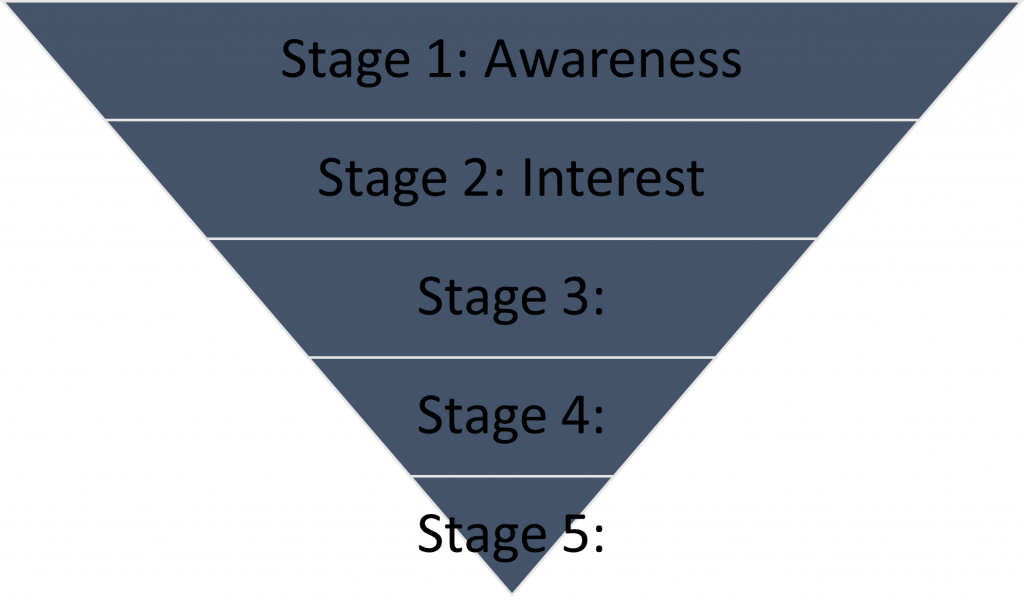
Stage 1: Awareness
Typically, at this stage a salesperson main deliverable is filling the top of his funnel with new opportunities. He has 3 options, lean on his current network, cold call/email target prospects or attend specific industry events.
The above has proven effective in the past, although each stage has a challenge associated with it:
- Lean on current network:
- This has a limit and is very dependent on the experience and the industry of the individual. Again, as an Entrepreneur, CEO or Sales leader, this is not scalable as any sales person has a finite network.
- Cold Call/Email
- This is a proven means of contacting target prospects, however, are you furnishing your salesperson with enough information and data. Do they have access to prospects phone numbers, emails, etc? Targeting the right clients and providing salespeople with up to date data is critical
- Industry Events
- In my opinion, attending free events and network evenings is a waste of time. You need to research which events are best based on potential lead outcomes and then allocate a budget for sales people to attend focused relevant events.
What does a sales team do differently?
In a sales team environment, you would have a dedicated team consistently filling the pipeline with new opportunities. You would have a combination of inbound (marketing led) and outbound (cold call led) opportunities entering the pipeline. These activities, should be scalable by leveraging automation and assigning a budget for strategic advertising.
The salesperson, will not be responsible for opening new opportunities but rather on the next stages. You need to have a data person, that person that is constantly collecting data for the sales people, its non productive and too expensive to have your sales people doing data research.
Stage 2: Interest
At this stage, the tele sales or as we call it sales development rep (SDR). has managed to book an initial meeting with a prospect and has to present the value proposition. The salesperson is then required to source marketing collateral to adequately present the solution to the target market, whilst having a detailed means to qualify the prospect to not waste time on the prospect. The sales person ends up spending their time preparing collateral rather than chasing people and hunting for telephone numbers, email addresses etc.
In a sales team, the saleperson will have a marketing specialist working hand-in-hand with them. The marketing specialist will provide and prepare relevant marketing and sales collateral to present to the client at all times, (we call them content creators). Further, the marketing specialist will have setup an automated means to keep the salesperson and the company top of mind for the prospect. The sales team will have setup an automated means to stay in contact with the prospect whether they are qualified or not. This ensures that prospects that are not suitably qualified are still aware of the value that your company has to offer.
Above marketing, a salesperson is consistently inundated with admin requirements enforced by management. The addition of a sales administrator can prove invaluable in these situations to update your CRM as well as ensure that prospects are being consistently engaged with. A good SDR is an invaluable admin assistant to your sales people.
Stage 3: Evaluation
At this stage, the salesperson has uncovered a particular need within the prospect account and is in the process of compiling a proposal or organizing a technical workshop, or a demonstration of your product or service. The biggest challenge I see sales people facing now is a lack of technical experience. This is dependent of the product being sold, however, selling within the enterprise space often required technical discussions that leave the salesperson stranded and deals being stalled.
In a sales team, the salesperson will have access to a pre-sales specialist. The pre-sales specialist is responsible for having all required technical conversations around the proposed solution. They are directly involved in compiling the proposal together with the salesperson. They work together to mitigate risks and satisfy all the technical requirements of the client. This inclusive of the product and services.
In a sales team, the sales person needs access to senior management and executives to work with him/her on compiling proposals, understanding pricing, terms and conditions, implementation plans, resource requirements from the client etc.
Stage 4: Decision and Negotiation
At this stage, the salesperson is often left to his own devices. Consistently meeting with the prospects relevant team members to ensure the proposal meets the requirements financially, technically, legally, etc.
In a functioning sales team, the salesperson works closely with the pre-sales specialist and senior management along with the prospect team to negotiate the deal to closure. At this stage of a deal, bring numbers to a meeting, provided they have a purpose, can be very impactful to closing the deal.
Stage 5: Closing
At this stage, the salesperson is responsible for ensuring all the paper work is signed and handing the deal over to the project team. The salesperson is required to stay in constant contact with the relevant stakeholders to ensure that the deal is going off without a hitch. The time spent in this area is often time consuming for the salesperson, especially, when they have been brought on to hunt new business. Credit management and chasing money is a definite NO for the sales person, they have to maintain a positive relationship with the customer.
Within a sales team, the salesperson would slowly hand over the opportunity to an account manager or client liaison who would be responsible for keeping in contact with the client and farming the client’s account. From my experience, it is clear that a business developer and account manager are two completely different people and you should structure your sales team accordingly. In the sales environment we distinguish between “hunters” and “farmers”… Different personas and different incentive plans.
In summary, a salesperson in isolation is risky and not necessarily scalable. However, a sales team, one that has all the parts mentioned above can be scalable. As such, our plea to Entrepreneurs, CEOs and Sales Directors alike is to ensure that all systems and processes are in place before expecting a sales person to perform – you are setting them up for failure.
Should you want a ready made sales team/engine, you have Braeven. If you have a requirement to build a scalable and sustainable sales department, we can help. Our teams include the following resources
People
- Sales Administrator
- Responsible for keeping CRMs up to date – shared resource
- Sales Development Rep
- Responsible for reaching cold into the market and booking appointments with targets personnel
- Marketing Specialist
- Responsible for Drip Email campaigns and content creation to align with the requirements of the sales team
- Business Development Rep
- Responsible for creating and formulating the opportunity into a proposal. They have a target aligned with generating new logos and revenue opportunities
- Senior Sales Strategist
- This person is often a more experienced sales persona and manager. All the other functions report to him/her and they are responsible for continuously optimizing the process whilst reporting metrics to senior management
- Account Manager
- They are responsible for taking on current accounts and farming the accounts for stable growth over time.
- Pre-sales Specialist
- This person is responsible for all technical aspects of compiling a potential deal. This person is very dependent on the specific service/solution that you take to market
Technologies
- Customer Relationship Management
- The most critical software for any sales team if used correctly. This solution should provide details relating to:
- Size of Average Deal
- Length of sales cycle
- Length of sales cycle related to source of opportunity
- Number of Opportunities Opened
- Conversion rates from initial meetings, to proposal to closure
- The most critical software for any sales team if used correctly. This solution should provide details relating to:
- Outbound Software
- This software is responsible for providing data on the specifics on outbound campaigns. Examples of data or information it should provide include:
- Number of Prospects Contacted
- Number of engagements before appointment booked
- Number of Meetings organised
- How the appointment was booked
- Number of Negative Feedback
- Number of Positive Feedback
- This software is responsible for providing data on the specifics on outbound campaigns. Examples of data or information it should provide include:
- Contact Database
- This software provides contact details of the individuals for your sales development reps to use. There are a plethora of these platforms available and are critical to the success of any outbound campaigns.
- Best practice sales processes
- We constantly examine and refine your sales process. Understanding what happens next, and who is responsible for what. Gaining a deep understanding on where are bottlenecks, why are deals not progressing, common objections etc.
- Lean on current network: