Blog
-

Utilizing Data and Analytics in Sales for Informed Decision-Making: A B2B Perspective
In the ever-evolving world of business, data has emerged as the lifeblood that fuels strategic decision-making. For B2B companies, leveraging data and analytics in sales processes isn’t merely an option; it’s a necessity. In this blog post, we’ll explore the paramount importance of utilizing data and analytics in B2B sales to drive informed, effective decisions and achieve sustainable growth.
Understanding the Data Revolution in B2B Sales
The digital age has ushered in an abundance of data generated at every touchpoint in the customer journey. This data encompasses customer interactions, purchasing history, preferences, market trends, and more. In the B2B landscape, this wealth of data holds immense potential to optimize sales strategies, enhance customer experiences, and gain a competitive edge.
Key Benefits of Utilizing Data and Analytics in B2B Sales
1. In-depth Customer Insights:
Data analytics enables B2B companies to gain comprehensive insights into their customers. This includes understanding their behaviors, preferences, pain points, and purchase history. Armed with this knowledge, sales teams can tailor their approach, anticipate needs, and offer personalized solutions, creating a more meaningful customer experience.
2. Precise Targeting and Segmentation:
Analyzing data allows B2B companies to segment their target audience with precision. By identifying distinct customer segments based on various parameters, such as industry, location, size, or behavior, businesses can craft targeted marketing and sales strategies, optimizing resource allocation and increasing the likelihood of successful conversions.
3. Enhanced Sales Forecasting:
Data analytics empowers B2B companies to make accurate sales forecasts. By analyzing historical sales data, market trends, and other relevant factors, sales teams can predict future sales trends, plan inventory, allocate resources efficiently, and set achievable sales targets.
4. Optimized Pricing Strategies:
Analyzing market and competitor data enables B2B companies to set competitive and profitable pricing strategies. By understanding market demand, price elasticity, and customer willingness to pay, businesses can price their products or services strategically to maximize revenue and profitability.
5. Streamlined Sales Processes:
Data analytics can help streamline and optimize sales processes. By analyzing the sales funnel, identifying bottlenecks, and understanding where prospects drop off, companies can make data-driven improvements to the sales process, resulting in a smoother customer journey and higher conversion rates.
6. Improved Customer Retention and Loyalty:
By analyzing customer feedback and behavior, B2B companies can identify factors influencing customer satisfaction and loyalty. Armed with this information, they can implement strategies to enhance customer experiences, resolve issues promptly, and strengthen customer relationships, leading to improved retention rates.
Implementing Data-Driven Sales Strategies in B2B Companies
Implementing data and analytics in sales effectively involves a well-planned strategy and the right tools. Here are steps to integrate data-driven approaches into your B2B sales processes:
1. Invest in a Robust CRM System:
A Customer Relationship Management (CRM) system is fundamental for collecting, organizing, and analyzing customer data. It acts as a central repository of customer information, interactions, and transactions, providing valuable insights for decision-making.
2. Define Key Metrics and KPIs:
Identify the critical metrics and Key Performance Indicators (KPIs) that align with your sales goals. These could include customer acquisition costs, customer lifetime value, conversion rates, and more. Regularly monitor and analyze these metrics to measure the effectiveness of your sales strategies.

3. Leverage Advanced Analytics Tools:
Explore advanced analytics tools that can process large volumes of data and generate actionable insights. Machine learning algorithms and predictive analytics can provide deeper understanding and help anticipate future trends and customer behavior.
4. Train Your Sales Team:
Provide training for your sales team on how to effectively use data and analytics. Equip them with the skills to interpret data insights and apply them to their sales approaches, enabling more informed decision-making.
5. Collaborate Across Departments:
Encourage collaboration between sales, marketing, and other relevant departments. Sharing data and insights between teams can provide a comprehensive view of the customer journey and lead to more effective strategies.
6. Continuously Adapt and Improve:
Regularly review and analyze the results of your data-driven strategies. Identify areas for improvement and adapt your approaches accordingly. The beauty of data-driven strategies is the ability to refine them based on real-time feedback and insights.
Overcoming Challenges and Embracing Data-Driven Sales Transformation
While the benefits of leveraging data and analytics in B2B sales are undeniable, challenges such as data privacy concerns, data quality issues, and the need for substantial investments in technology and training can hinder adoption. However, the long-term advantages far outweigh these challenges.
By establishing robust data governance protocols, investing in data quality enhancement tools, and prioritizing data privacy and compliance, B2B companies can mitigate these challenges. The investment in technology and training is an investment in the future, leading to enhanced competitiveness and sustainability.
Conclusion
In the digital age, data is the linchpin for informed decision-making in B2B sales. By harnessing the power of data and analytics, B2B companies can unlock deeper customer insights, optimize sales processes, and drive sustainable growth. The transformative potential of data-driven strategies is immense, and companies that embrace this revolution will undoubtedly gain a significant advantage in the highly competitive B2B landscape. Embrace data, and watch your B2B sales soar to new heights of success.

-

Building Strong Customer Relationships for Long-Term Sales Success in B2B Companies
In the realm of business-to-business (B2B) interactions, establishing and maintaining strong customer relationships is the bedrock of success. Unlike business-to-consumer (B2C) transactions, B2B engagements often involve complex, long-term partnerships that necessitate a deeper level of understanding and collaboration. Building and nurturing strong customer relationships not only bolsters sales in the short term but paves the way for sustainable success over the long haul. In this blog post, we’ll delve into effective strategies for cultivating enduring customer relationships that are crucial for B2B companies.
Understanding the B2B Landscape
B2B transactions are fundamentally distinct from B2C transactions, primarily in terms of scale, complexity, and decision-making processes. B2B interactions often involve intricate negotiation processes, multiple stakeholders, and long-term contracts. The relationships formed in B2B settings tend to be enduring, with the potential for recurring business opportunities.
Key Elements of Strong Customer Relationships
1. Transparency and Open Communication:
Clear and open communication is the cornerstone of any successful business relationship. B2B customers appreciate transparency regarding products, services, pricing, and terms. Keeping clients informed at every stage of a project or transaction builds trust and demonstrates integrity.
Establishing a consistent communication channel, whether through regular status updates, newsletters, or dedicated account managers, fosters an environment where clients feel comfortable expressing their needs and concerns. Actively listening to your clients and addressing their issues promptly and effectively can significantly strengthen the bond between your company and its customers.
2. Customer-Centric Approach:
Understanding your customer’s business needs, challenges, and goals is paramount. Tailoring your products or services to meet these specific needs showcases a customer-centric approach. By demonstrating that you have their best interests at heart, you establish a foundation for a long-term partnership.
Engage with your customers to understand their pain points and work collaboratively to devise solutions that add value to their operations. Strive to exceed their expectations consistently, reinforcing their belief that your company is a reliable partner invested in their success.
3. Reliability and Consistency:
Consistency breeds reliability, a crucial factor in any B2B relationship. Delivering on promises and commitments, meeting deadlines, and providing high-quality products or services establish your company as a dependable partner.
Reliability is about being there when your customers need you, anticipating their needs, and proactively addressing potential issues. Establishing a reputation for consistent excellence lays the foundation for a strong, lasting customer relationship.
4. Personalization and Customization:
Every customer is unique, and understanding and appreciating this uniqueness is vital. Tailor your interactions, products, and services to suit each customer’s specific requirements. Personalization demonstrates that you value your customers as individuals and not just as business entities.
Collect and utilize data to understand your customer’s preferences, history, and purchasing behavior. Leverage this data to create personalized experiences and offerings that resonate with them, making them more likely to remain loyal and engage in repeat business.
5. Adaptability and Flexibility:
In the dynamic world of B2B, adaptability is key. Markets change, businesses evolve, and so do customer needs. It’s vital to be flexible and responsive to these changes. This could mean adjusting your offerings, terms, or processes to better align with your customer’s evolving requirements.
An adaptable approach demonstrates your commitment to your customer’s success and willingness to evolve in tandem with their changing needs, cementing your position as a valuable and long-term partner.
6. Regular Feedback and Improvement:
Engage your customers for feedback on your products, services, and overall relationship. Constructive criticism can provide invaluable insights for enhancing your offerings and processes.
Show your customers that their feedback is valued by implementing changes based on their suggestions. This not only improves your products and services but also strengthens your relationship by demonstrating your dedication to meeting their expectations.
Implementing Customer Relationship Strategies
Effectively implementing these strategies requires a concerted effort from your entire organization. Here’s how to put these strategies into action and drive successful customer relationship building within your B2B company:
1. Train Your Team:
Equip your sales and account management teams with the necessary skills to understand, engage, and communicate effectively with B2B clients. Providing training on negotiation techniques, active listening, and relationship management is crucial.
2. Leverage Technology:
Invest in a robust Customer Relationship Management (CRM) system that enables efficient tracking of customer interactions, preferences, and feedback. Utilize data analytics to gain actionable insights into customer behavior and preferences.
3. Develop Customer-Centric Policies:
Incorporate customer-centric policies that emphasize the importance of customer satisfaction, feedback, and continuous improvement within your organizational culture.
4. Establish Dedicated Relationship Managers:
Assign dedicated relationship managers to key accounts. These managers will act as a point of contact for customers, ensuring their needs are understood and met effectively.
5. Conduct Regular Customer Surveys:
Periodically conduct surveys to gather feedback on customer satisfaction, areas for improvement, and new needs that may have emerged.
6. Organize Customer Appreciation Events:
Host events or webinars specifically for your customers to demonstrate your gratitude for their business and provide opportunities for networking and learning.
Conclusion
Building strong customer relationships in the B2B landscape is a strategic imperative. Cultivating enduring relationships based on transparency, customer-centricity, reliability, personalization, adaptability, and continuous improvement is essential for long-term sales success. By prioritizing these relationships and implementing the right strategies, B2B companies can solidify their position as trusted partners in their customers’ growth and success journey.
Remember, in the B2B world, a satisfied customer today can be a loyal customer for a lifetime, driving sustained growth and prosperity for your business.
-

Sales Team vs Sales Person
There is a misconception in the market that to grow sales in a business, you need to hire more salespeople. This is simply not true, building an efficient and equipped sales team will enable you to scale your sales efforts.
You need to hire the right types of people, have clear definition of your sales process, understand the unique skills required by the different role players in the team, and then equip the team with the right technologies to enable them to be super productive, efficient, and successful.
Whilst adding a salesperson to your team can prove to be a differentiator, a more impactful differentiator is one where aspects of the sales cycle are taken into account to enable your new sales people to be more productive.
So what are all these aspects that should be considdered? I will break them down into the various stages of the sales cycle.
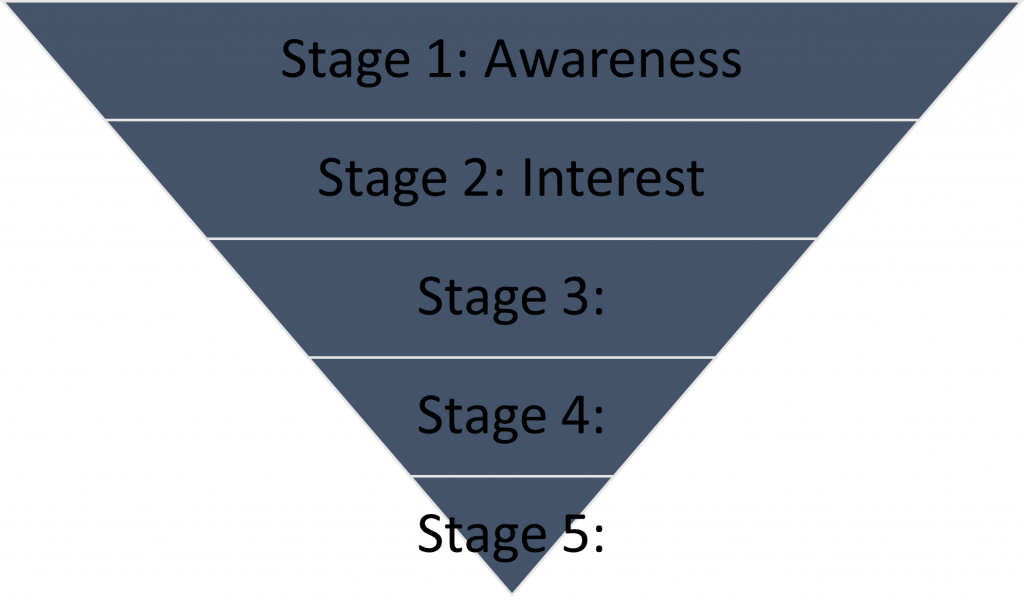
Stage 1: Awareness
Typically, at this stage a salesperson main deliverable is filling the top of his funnel with new opportunities. He has 3 options, lean on his current network, cold call/email target prospects or attend specific industry events.
The above has proven effective in the past, although each stage has a challenge associated with it:
- Lean on current network:
- This has a limit and is very dependent on the experience and the industry of the individual. Again, as an Entrepreneur, CEO or Sales leader, this is not scalable as any sales person has a finite network.
- Cold Call/Email
- This is a proven means of contacting target prospects, however, are you furnishing your salesperson with enough information and data. Do they have access to prospects phone numbers, emails, etc? Targeting the right clients and providing salespeople with up to date data is critical
- Industry Events
- In my opinion, attending free events and network evenings is a waste of time. You need to research which events are best based on potential lead outcomes and then allocate a budget for sales people to attend focused relevant events.
What does a sales team do differently?
In a sales team environment, you would have a dedicated team consistently filling the pipeline with new opportunities. You would have a combination of inbound (marketing led) and outbound (cold call led) opportunities entering the pipeline. These activities, should be scalable by leveraging automation and assigning a budget for strategic advertising.
The salesperson, will not be responsible for opening new opportunities but rather on the next stages. You need to have a data person, that person that is constantly collecting data for the sales people, its non productive and too expensive to have your sales people doing data research.
Stage 2: Interest
At this stage, the tele sales or as we call it sales development rep (SDR). has managed to book an initial meeting with a prospect and has to present the value proposition. The salesperson is then required to source marketing collateral to adequately present the solution to the target market, whilst having a detailed means to qualify the prospect to not waste time on the prospect. The sales person ends up spending their time preparing collateral rather than chasing people and hunting for telephone numbers, email addresses etc.
In a sales team, the saleperson will have a marketing specialist working hand-in-hand with them. The marketing specialist will provide and prepare relevant marketing and sales collateral to present to the client at all times, (we call them content creators). Further, the marketing specialist will have setup an automated means to keep the salesperson and the company top of mind for the prospect. The sales team will have setup an automated means to stay in contact with the prospect whether they are qualified or not. This ensures that prospects that are not suitably qualified are still aware of the value that your company has to offer.
Above marketing, a salesperson is consistently inundated with admin requirements enforced by management. The addition of a sales administrator can prove invaluable in these situations to update your CRM as well as ensure that prospects are being consistently engaged with. A good SDR is an invaluable admin assistant to your sales people.
Stage 3: Evaluation
At this stage, the salesperson has uncovered a particular need within the prospect account and is in the process of compiling a proposal or organizing a technical workshop, or a demonstration of your product or service. The biggest challenge I see sales people facing now is a lack of technical experience. This is dependent of the product being sold, however, selling within the enterprise space often required technical discussions that leave the salesperson stranded and deals being stalled.
In a sales team, the salesperson will have access to a pre-sales specialist. The pre-sales specialist is responsible for having all required technical conversations around the proposed solution. They are directly involved in compiling the proposal together with the salesperson. They work together to mitigate risks and satisfy all the technical requirements of the client. This inclusive of the product and services.
In a sales team, the sales person needs access to senior management and executives to work with him/her on compiling proposals, understanding pricing, terms and conditions, implementation plans, resource requirements from the client etc.
Stage 4: Decision and Negotiation
At this stage, the salesperson is often left to his own devices. Consistently meeting with the prospects relevant team members to ensure the proposal meets the requirements financially, technically, legally, etc.
In a functioning sales team, the salesperson works closely with the pre-sales specialist and senior management along with the prospect team to negotiate the deal to closure. At this stage of a deal, bring numbers to a meeting, provided they have a purpose, can be very impactful to closing the deal.
Stage 5: Closing
At this stage, the salesperson is responsible for ensuring all the paper work is signed and handing the deal over to the project team. The salesperson is required to stay in constant contact with the relevant stakeholders to ensure that the deal is going off without a hitch. The time spent in this area is often time consuming for the salesperson, especially, when they have been brought on to hunt new business. Credit management and chasing money is a definite NO for the sales person, they have to maintain a positive relationship with the customer.
Within a sales team, the salesperson would slowly hand over the opportunity to an account manager or client liaison who would be responsible for keeping in contact with the client and farming the client’s account. From my experience, it is clear that a business developer and account manager are two completely different people and you should structure your sales team accordingly. In the sales environment we distinguish between “hunters” and “farmers”… Different personas and different incentive plans.
In summary, a salesperson in isolation is risky and not necessarily scalable. However, a sales team, one that has all the parts mentioned above can be scalable. As such, our plea to Entrepreneurs, CEOs and Sales Directors alike is to ensure that all systems and processes are in place before expecting a sales person to perform – you are setting them up for failure.
Should you want a ready made sales team/engine, you have Braeven. If you have a requirement to build a scalable and sustainable sales department, we can help. Our teams include the following resources
People
- Sales Administrator
- Responsible for keeping CRMs up to date – shared resource
- Sales Development Rep
- Responsible for reaching cold into the market and booking appointments with targets personnel
- Marketing Specialist
- Responsible for Drip Email campaigns and content creation to align with the requirements of the sales team
- Business Development Rep
- Responsible for creating and formulating the opportunity into a proposal. They have a target aligned with generating new logos and revenue opportunities
- Senior Sales Strategist
- This person is often a more experienced sales persona and manager. All the other functions report to him/her and they are responsible for continuously optimizing the process whilst reporting metrics to senior management
- Account Manager
- They are responsible for taking on current accounts and farming the accounts for stable growth over time.
- Pre-sales Specialist
- This person is responsible for all technical aspects of compiling a potential deal. This person is very dependent on the specific service/solution that you take to market
Technologies
- Customer Relationship Management
- The most critical software for any sales team if used correctly. This solution should provide details relating to:
- Size of Average Deal
- Length of sales cycle
- Length of sales cycle related to source of opportunity
- Number of Opportunities Opened
- Conversion rates from initial meetings, to proposal to closure
- The most critical software for any sales team if used correctly. This solution should provide details relating to:
- Outbound Software
- This software is responsible for providing data on the specifics on outbound campaigns. Examples of data or information it should provide include:
- Number of Prospects Contacted
- Number of engagements before appointment booked
- Number of Meetings organised
- How the appointment was booked
- Number of Negative Feedback
- Number of Positive Feedback
- This software is responsible for providing data on the specifics on outbound campaigns. Examples of data or information it should provide include:
- Contact Database
- This software provides contact details of the individuals for your sales development reps to use. There are a plethora of these platforms available and are critical to the success of any outbound campaigns.
- Best practice sales processes
- We constantly examine and refine your sales process. Understanding what happens next, and who is responsible for what. Gaining a deep understanding on where are bottlenecks, why are deals not progressing, common objections etc.
- Lean on current network:
-

The Fear of phoning…
I don’t know about you but in my business experience I have become increasingly aware of the fact that individuals fear picking up the phone and phoning people. Whether it is placing an order for a takeaway or contacting the CEO of a Fortune 500 company, the insecurities around “chatting” to someone on the phone seems to be growing as each generation comes of age.
One reasoning behind this is the rise of social media and general texting. According to PEWResearch, 75% of millennials would rather text than talk, in my opinion, contributing to the fear of the cell phone.
In sales, there should be no such thing as a fear in calling people, however, I still come across individuals, particularly millennials, me being one of them, who are afraid of dialing a prospect. This may be because the days of the “Cold Call” The idea of cold calling is are long gone,. anyone, again, in my opinion, No one does not wants to receive a cold call from someone to attempt to sell a product!. However, that being said, tBut, he a phone call is still the best tool to use in the event of Wwarm Rreferral. Making that immediate connection and then explaining your value offering will ensure your prospect lowers their guard.
But back to the subject at hand… WSo why are people afraid of phoning?
Confidence
Another key reasoning is confidence. Or a lack of fFrom a sales perspective., I have reason to believe that the phone is not picked up because of an insecurity around a lack of knowledge and fear that the target prospect might ask a question or two that will leave the salesperson with egg on their face. To beat this is easy. Be prepaired My counter argument to this point is preparation. Should you be adequately prepared RE regarding who you are phoning, what you are phoning about and what answers you are seeking the only reason NOT to now make the phone call is preparedness.. This will allow you to leave the angst behind and dial away. Whether it is following up on a lead or nurturing a hot prospect through the sales cycle, being adequately prepared should remove any insecurity around confidence on the phone.
Lack of non-verbal communication
According to numerous psychological studies, non-verbal communication accounts for 70-90% of all communication. As such, this lack of ability to interpret the recipient’s reaction leaves people a bit nervous as they are not able to take facial expressions, body language and gestures into account when communicating. However, I have found that a lot can be understood and interpreted through the tone of the voice alone. Although, body language is important, fully paying attention and listening to your counterpart on the phone can curb this insecurity. Again, being prepared before making the phone call whether it is to order a pizza or organise a follow-up meeting will enable you to remove this obstacle.
Time Pressure
The limited time available when making a phone call also leave certain individuals with an uncomfortable feeling when making a phone call. Compared to an email or a text message, once you have someone on the phone you have a limited time to get your specific message across and must think on your feet. Again, my immediate reaction to this obstacle is, once again, being prepared. Should you feel nervous to pick up the phone and are worried that you might get asked a question that you are uncertain about then adequate preparation should again curb this anxiety. The preparation should be done for both situations where you have and don’t have the answer. The idea behind the phone call, at least from a sales perspective, is to ensure that you keep the communication between yourself and your prospect alive. In addition it is really important to remember that the call is not the time to present your solution, but rather to secure more time to share with your prospect. This greatly reduces the pressure and allows you to give the prospect space to talk. To communicate. To form a connection.
Lack of Experience
Another common trend is simply a lack of ever phoning people. In an era are with apps, chatbots and emojis, picking up the phone is a lost art. My only real advise or opinion on this is trial by fire.
A friend of mine has a particularly effective means to immediately curb this. He currently runs a debt collection agency and no matter what position you have to fill; it is company policy to spend at least 32-4 weeks on the phone lines phoning people for debt collecting reasons. This not only makes people aware of what the core function of the business is but also cures any fear that a person might have of calling people.
So… how does one curb this fear to pick up the phone.
The only answer, trial by fire. Is that yYou need to start. Once you have been through a few tough phone calls that are tough and probably awkward, you will realise that picking up the phone can be an incredible tool in your professional and social life.to use.
Whether you are in sales, project management or trying to applying for a new position the phone is an invaluable tool. Picking up the phone and contacting the relevant stakeholder can immediately notify you of where you stand in your relationship and ensure that there is a consistent line of communication. Furthermore, tone and the fact that the recipient might have just as much anxiety on the phone as you can work to your advantage to get more information that you bargained for.
I hope this helps one or two anxious people out there with their fear of the phone…
Happy phoning.
Rejection – Afraid of the “ no thanks” …instead try to persevere and changing the “ no thanks” to yes maybe.
-

Summary of Predictable Revenue by Aaron Ross and Marylou Tyler
Predictable Revenue is a book written by Aaron Ross and Marylou Tyler that aims to provide a blueprint for B2B companies to achieve predictable revenue growth. The book introduces a sales methodology that involves breaking down the sales process into specialized roles and optimizing each stage using technology, metrics, and processes.
The authors begin by discussing the challenges that B2B companies face in generating consistent and predictable revenue growth. They note that traditional sales methods, such as cold calling, are becoming less effective as prospects become increasingly wary of sales pitches. As a result, companies need to adopt new sales methodologies that focus on building relationships with prospects and delivering value.
To achieve this, the authors propose the concept of the Sales Machine, which involves breaking down the sales process into specialized roles and using a combination of technology, metrics, and processes to optimize each stage. The Sales Machine consists of four stages: Lead Generation, Lead Qualification, Opportunity Management, and Account Management.
The Lead Generation stage is responsible for generating new leads for the company. The authors argue that traditional methods of lead generation, such as cold calling, are becoming less effective and that companies need to adopt new methods that focus on building relationships with prospects. They propose the concept of the Cold Call 2.0, which involves using targeted emails and calls to generate leads and build relationships with potential customers.
The Lead Qualification stage is responsible for qualifying leads generated by the Lead Generation stage. The authors argue that this stage is critical to the success of the sales process, as it ensures that the company is focusing its efforts on prospects that are most likely to convert. They propose a set of qualification criteria that companies can use to determine which leads to pursue.
The Opportunity Management stage is responsible for managing opportunities that have been qualified by the Lead Qualification stage. The authors argue that this stage is critical to the success of the sales process, as it ensures that the company is focusing its efforts on opportunities that are most likely to convert. They propose a set of metrics that companies can use to track the progress of opportunities through the sales process.
The Account Management stage is responsible for managing the ongoing relationship with customers. The authors argue that this stage is critical to the success of the sales process, as it ensures that the company is delivering value to customers and driving repeat business. They propose a set of metrics that companies can use to track customer success and ensure that customers are satisfied with the company’s products and services.
The authors also introduce the concept of the Dream 100, which involves identifying the 100 companies that the company would most like to do business with and focusing its efforts on building relationships with those companies. They argue that this approach is more effective than a scattergun approach to sales and that it can help companies to build long-term, profitable relationships with key customers.
Throughout the book, the authors emphasize the importance of creating a system for generating consistent leads, nurturing those leads through the sales funnel, and focusing on customer success to drive repeat business. They argue that by adopting the Sales Machine methodology, companies can achieve predictable revenue growth and build long-term, profitable relationships with customers.
In addition to the Sales Machine methodology, the authors also provide practical advice on how to implement the methodology in practice. They discuss the importance of hiring the right people for each stage of the sales process, providing training and support to ensure that they are successful, and using technology to automate and streamline the sales process.
Overall, Predictable Revenue provides a comprehensive blueprint for B2B companies looking to achieve predictable revenue growth. The Sales Machine methodology provides a structured approach to the sales process, while the Dream 100 approach provides a targeted approach to building relationships with key customers. By adopting these approaches and focusing on customer success, companies can achieve predictable revenue growth and build long-term, profitable relationships with customers.
-

$100 million Offers by Alex Mandossian
“100 Million Dollar Offers” is a book written by Alex Mandossian and Steve Olsher that explores the world of creating high-ticket offers. The book provides a roadmap for entrepreneurs and business owners to create and sell high-ticket offers that can generate millions of dollars in revenue.
The book begins by introducing the concept of high-ticket offers and why they are important for businesses looking to generate significant revenue. The authors define a high-ticket offer as a product or service that is priced at $10,000 or more. They argue that high-ticket offers can help businesses break through revenue ceilings and achieve significant growth.
The authors then discuss the key components of a successful high-ticket offer. They argue that a high-ticket offer should be based on a compelling idea, offer a transformational result, and be priced appropriately. They also stress the importance of building trust and credibility with potential buyers, as well as creating a sense of urgency to drive sales.
The book then delves into the process of creating a high-ticket offer, which the authors break down into six steps. The first step is to identify the ideal client, which involves understanding the demographics, psychographics, and pain points of the target market. The second step is to craft the core message, which involves developing a compelling value proposition that speaks to the needs of the ideal client.
The third step is to develop the offer, which involves creating a package of products or services that can deliver a transformational result to the client. The authors provide guidance on how to price the offer appropriately, as well as how to create a sense of urgency to drive sales.
The fourth step is to create the marketing materials, which involves developing a sales page, email sequences, and other promotional materials that can help sell the offer. The authors provide guidance on how to create effective marketing materials that can capture the attention of potential buyers and drive them to take action.
The fifth step is to launch the offer, which involves executing a marketing campaign to promote the offer to the target market. The authors provide guidance on how to create a launch plan that can generate excitement and anticipation for the offer, as well as how to use social media, email marketing, and other channels to reach potential buyers.
The final step is to optimize the offer, which involves refining the offer and the marketing materials based on feedback and results. The authors stress the importance of using data and analytics to track the success of the offer and identify areas for improvement.
Throughout the book, the authors provide real-world examples of businesses that have successfully created and sold high-ticket offers. They also provide practical advice on how to overcome common challenges and obstacles that businesses may encounter when creating high-ticket offers, such as pricing, positioning, and marketing.
One of the key takeaways from the book is the importance of creating an offer that is truly transformational for the client. The authors argue that businesses should focus on delivering real value and results to their clients, rather than simply trying to make a quick sale. They stress the importance of building trust and credibility with potential buyers, as well as creating a sense of urgency to drive sales.
Another key takeaway is the importance of data and analytics in creating and optimizing high-ticket offers. The authors emphasize the importance of tracking key metrics such as conversion rates, sales volume, and customer feedback, and using that data to refine the offer and the marketing materials.
Overall, “100 Million Dollar Offers” is a comprehensive guide to creating and selling high-ticket offers. The book provides a clear roadmap for businesses looking to break through revenue ceilings and achieve significant growth. With practical advice, real-world examples, and a focus on delivering real value to clients, this book is a valuable resource for any entrepreneur or business owner looking to create a high-ticket offer that can generate significant revenue.
-

5 Ways to Build Trust with B2B Customers
In B2B sales, building trust with customers is essential to creating long-term relationships and generating repeat business. Trust is the foundation of any successful business relationship, and it is particularly important in B2B sales, where the stakes are high and the sales cycles are often complex and lengthy. In this post, we will discuss five ways to build trust with your B2B customers.
- Demonstrate expertise
One of the most effective ways to build trust with B2B customers is to demonstrate your expertise in your industry or field. This can include sharing thought leadership content, such as whitepapers or blog posts, speaking at industry events, or providing in-depth product demos. By showing that you have a deep understanding of your customers’ needs and challenges, you can establish yourself as a trusted advisor and build credibility with your audience.
For example, let’s say you are a software company that specializes in enterprise resource planning (ERP) solutions. To demonstrate your expertise to potential customers, you might publish a whitepaper that discusses the latest trends and best practices in ERP implementation, or present at a conference on the topic of digital transformation in manufacturing. By sharing your knowledge and insights with your audience, you can establish yourself as a thought leader in your field and build trust with your potential customers.
- Be transparent
Transparency is key to building trust in any relationship, including B2B sales. This means being upfront and honest about your product or service offerings, pricing, and any potential challenges or limitations. By being transparent, you can establish yourself as a trustworthy partner who is committed to delivering value to your customers.
For example, let’s say you are a marketing agency that specializes in search engine optimization (SEO) services. To be transparent with potential customers, you might provide a detailed breakdown of your pricing structure, including any additional costs or fees that may apply. You might also be upfront about the limitations of your services, such as the fact that SEO is a long-term strategy that requires ongoing investment and optimization.
By being transparent with your customers, you can establish a foundation of trust and ensure that everyone is on the same page from the outset. This can help to prevent misunderstandings and build a stronger relationship between you and your customers.
- Provide exceptional customer service
Providing exceptional customer service is another important way to build trust with B2B customers. This includes responding to inquiries in a timely manner, providing personalized support, and going above and beyond to ensure that your customers are satisfied with your products or services. By demonstrating that you are invested in your customers’ success, you can establish a strong foundation of trust and loyalty.
For example, let’s say you are a technology company that provides customer relationship management (CRM) software to businesses. To provide exceptional customer service, you might offer personalized support to help your customers get the most out of your software, such as providing onboarding and training sessions or offering customized integrations with other software tools. You might also have a dedicated customer support team that is available 24/7 to answer any questions or concerns.
By providing exceptional customer service, you can demonstrate your commitment to your customers’ success and build trust and loyalty over time. This can help to create long-term relationships that are beneficial for both you and your customers.
- Build relationships
Building relationships is a key component of building trust in B2B sales. This means taking the time to get to know your customers, their goals and challenges, and their unique needs. By building strong relationships based on mutual respect and understanding, you can establish yourself as a trusted partner who is committed to your customers’ success.
For example, let’s say you are a consulting firm that specializes in supply chain management. To build relationships with potential customers, you might attend industry events and conferences to network and meet new people.
You might also take the time to schedule one-on-one meetings with key decision-makers at target companies to learn more about their specific challenges and pain points. By investing in building relationships with your customers, you can establish a foundation of trust and loyalty that can lead to long-term partnerships and repeat business.
- Follow through on your promises
Finally, following through on your promises is essential to building trust with B2B customers. This means delivering on your commitments, meeting deadlines, and providing high-quality products or services that meet or exceed your customers’ expectations. By demonstrating that you are reliable and dependable, you can establish yourself as a trusted partner who is committed to delivering value to your customers.
For example, let’s say you are a manufacturing company that produces custom components for a variety of industries. To follow through on your promises, you might establish strict quality control measures to ensure that your products meet the highest standards of quality and reliability. You might also have a dedicated logistics team that is responsible for ensuring timely delivery of your products to your customers.
By following through on your promises, you can establish a reputation for reliability and dependability that can help to build trust with your customers. This can lead to long-term partnerships and repeat business, as well as positive word-of-mouth referrals that can help to grow your business over time.
Conclusion
Building trust with B2B customers is essential to creating long-term relationships and generating repeat business. By demonstrating your expertise, being transparent, providing exceptional customer service, building relationships, and following through on your promises, you can establish yourself as a trusted partner who is committed to delivering value to your customers. By investing in building trust with your customers, you can create a strong foundation for success that can help to grow your business over time.